The figures behind the numbers. Synthetic foils have a
cell width known exactly by construction, so they are the only place where
an error can be quoted against truth.
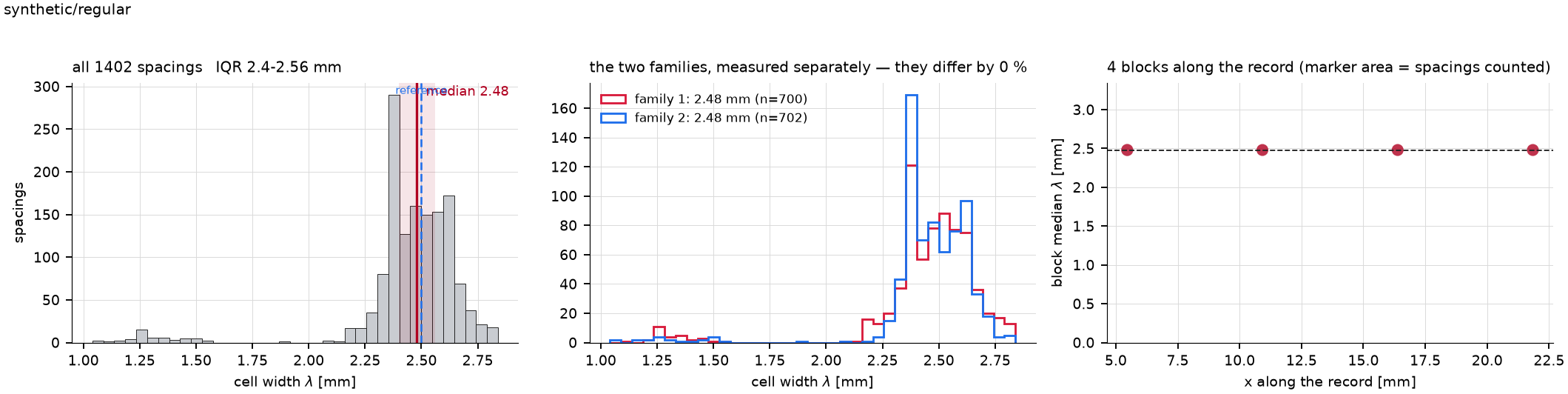
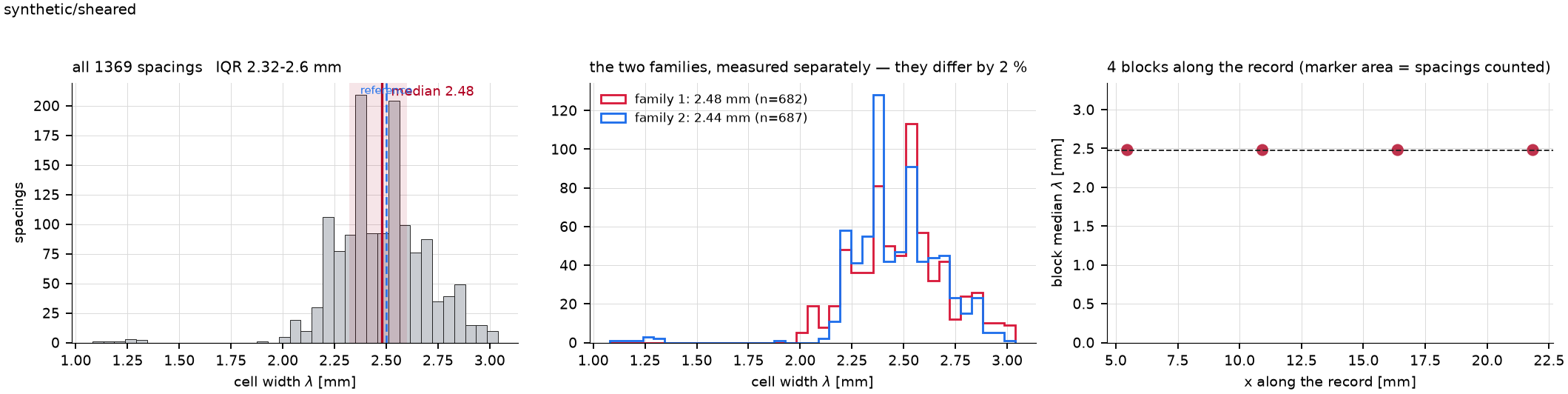
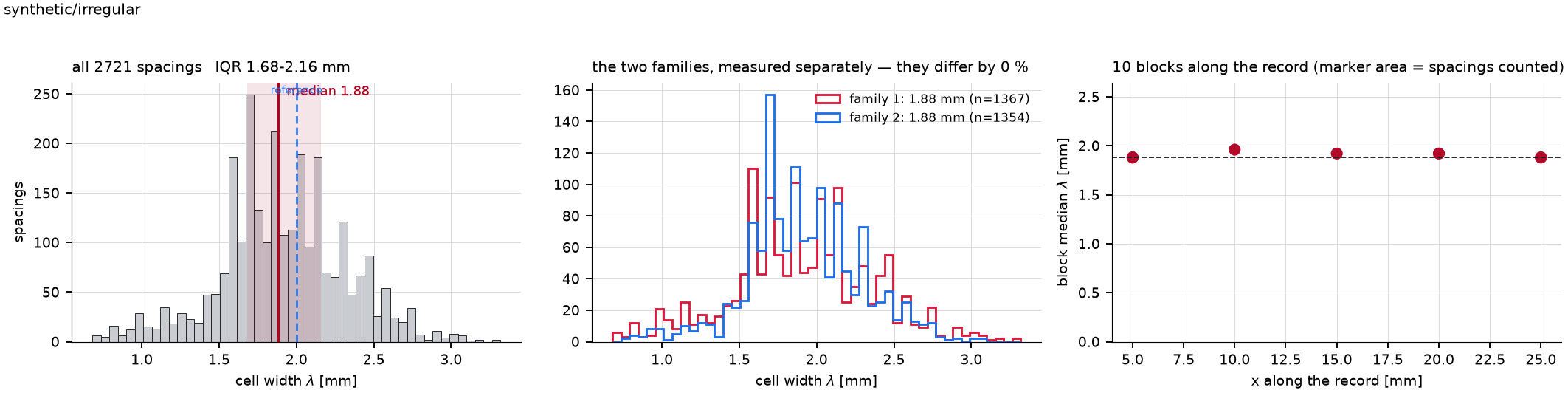
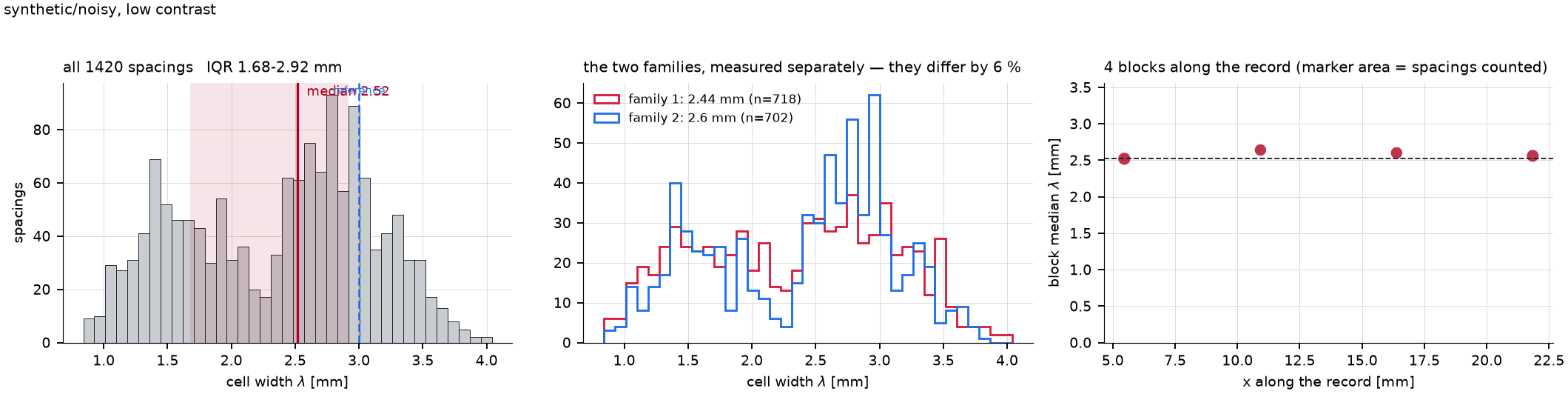
The result: every spacing measured against the true value, the
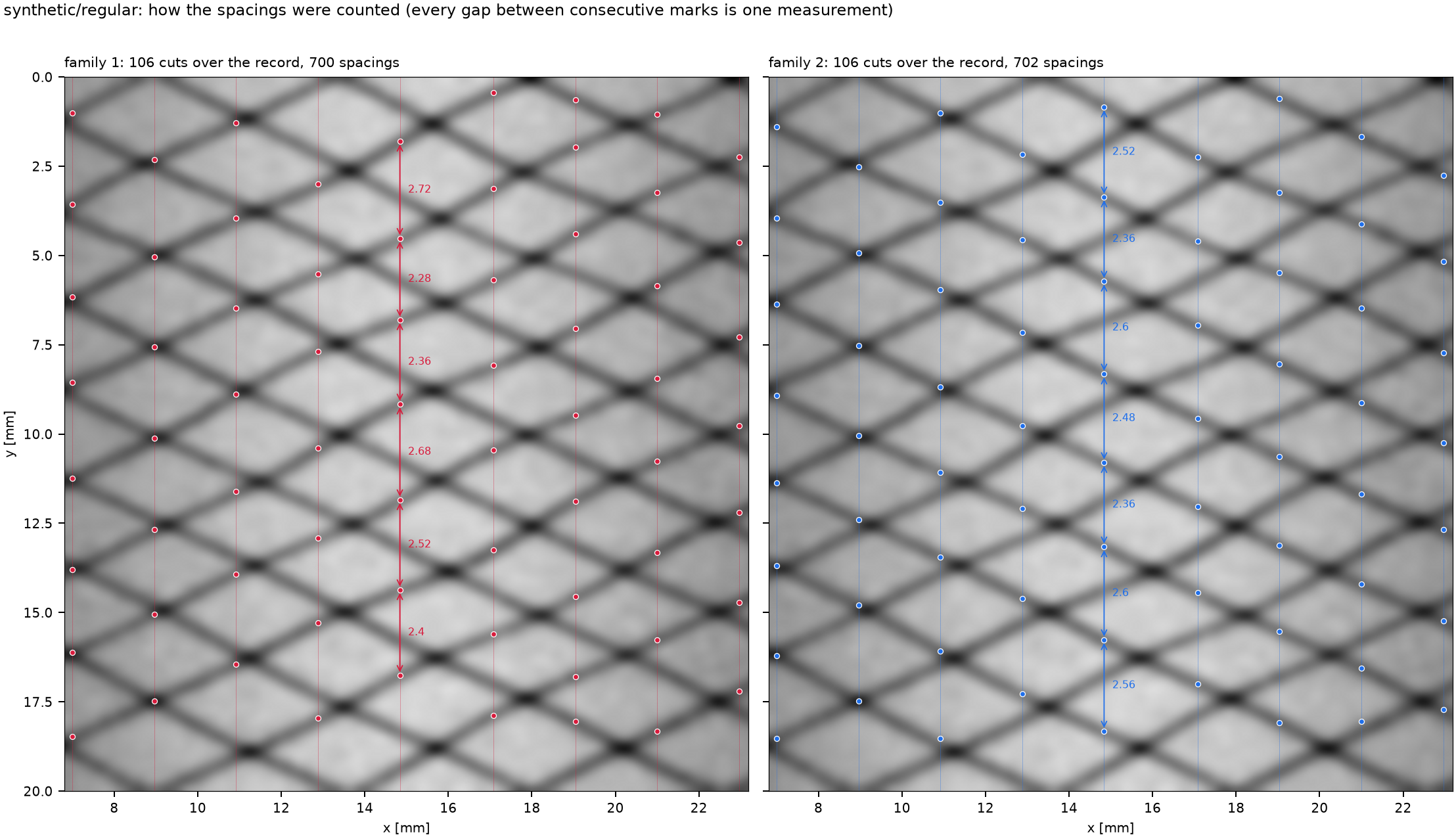
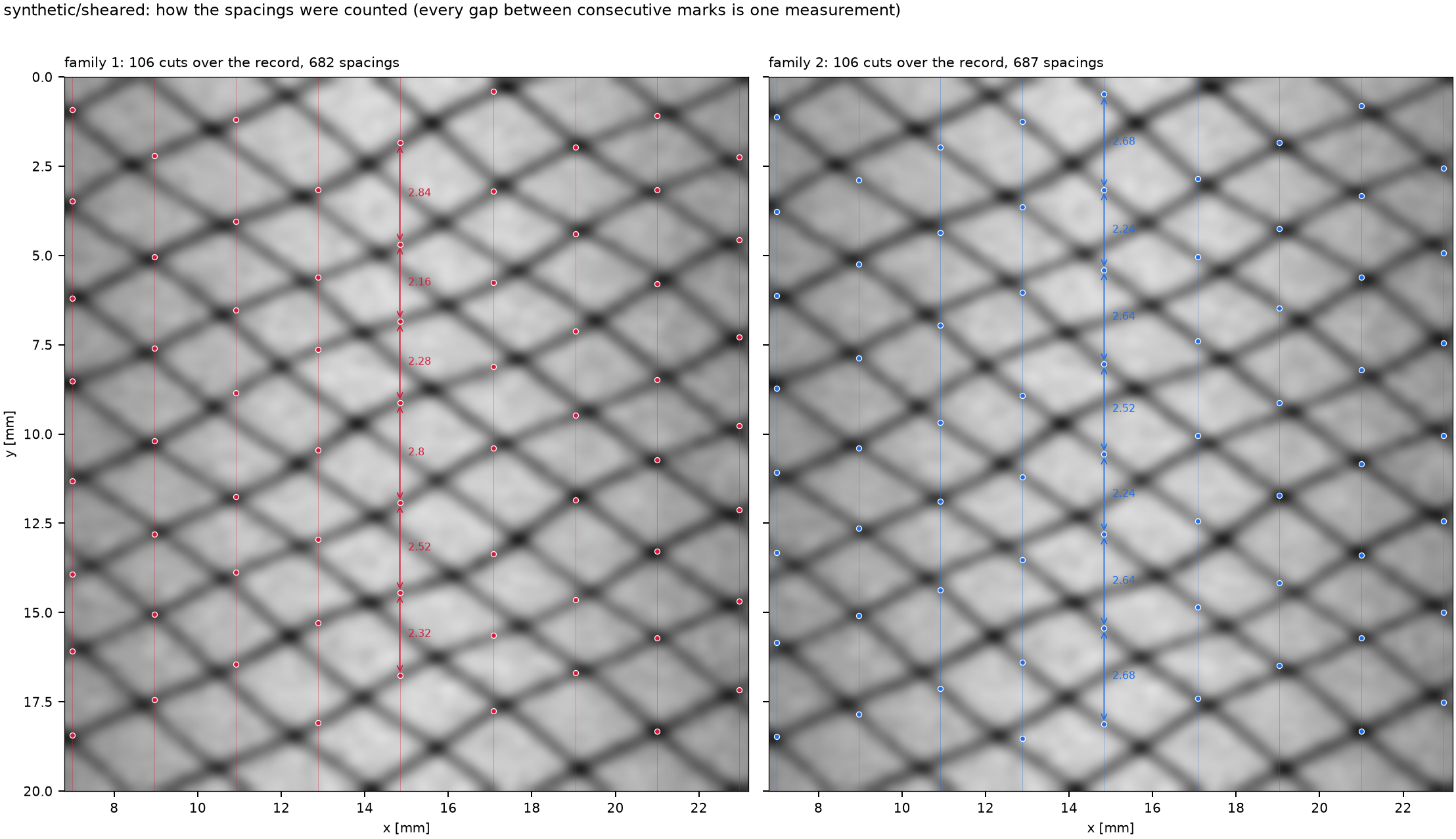
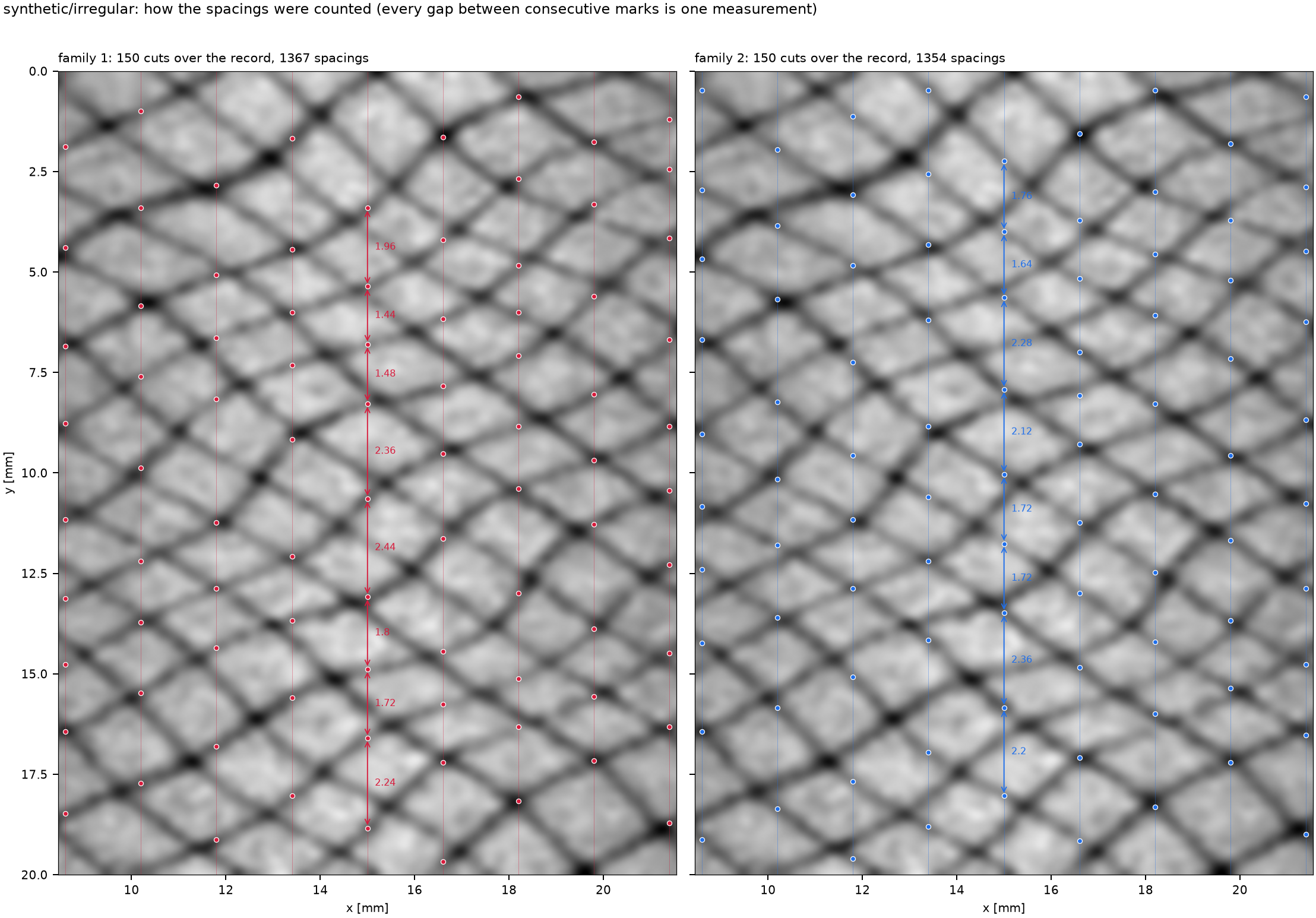
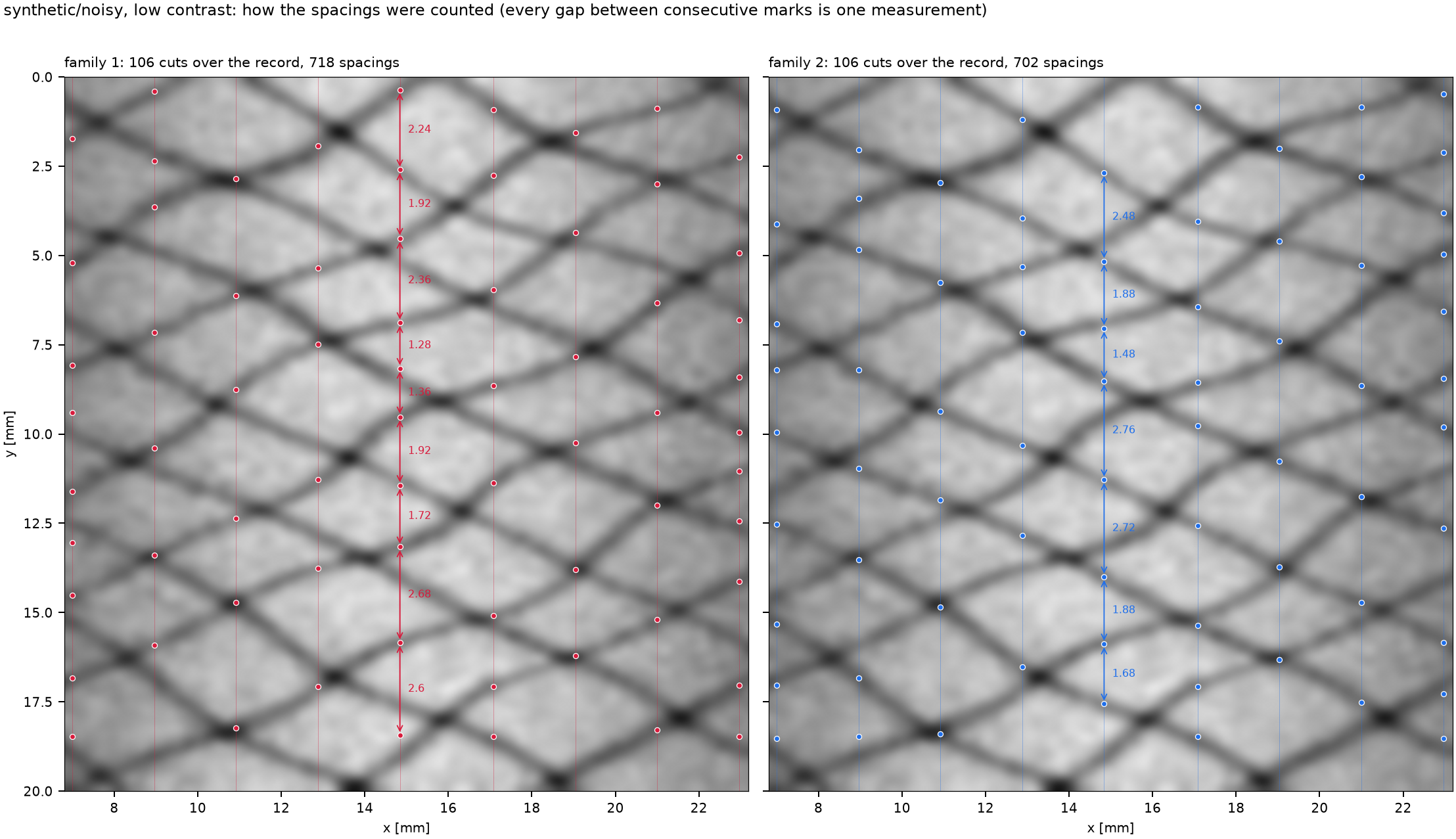
two families separately, and the block medians along the record.Where the numbers come from — the vertical cuts, the
trajectory crossings found on them, and the gaps between consecutive
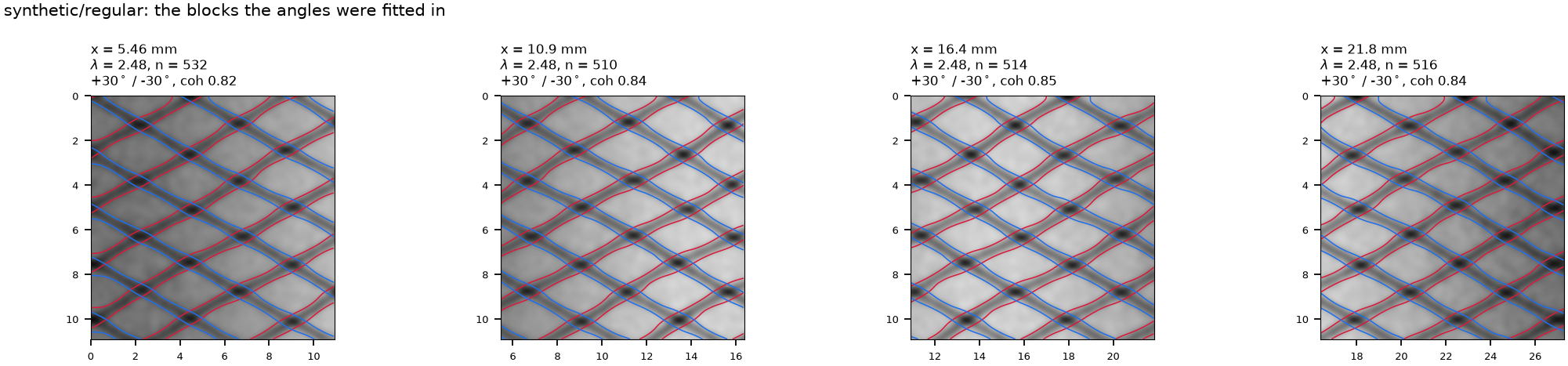
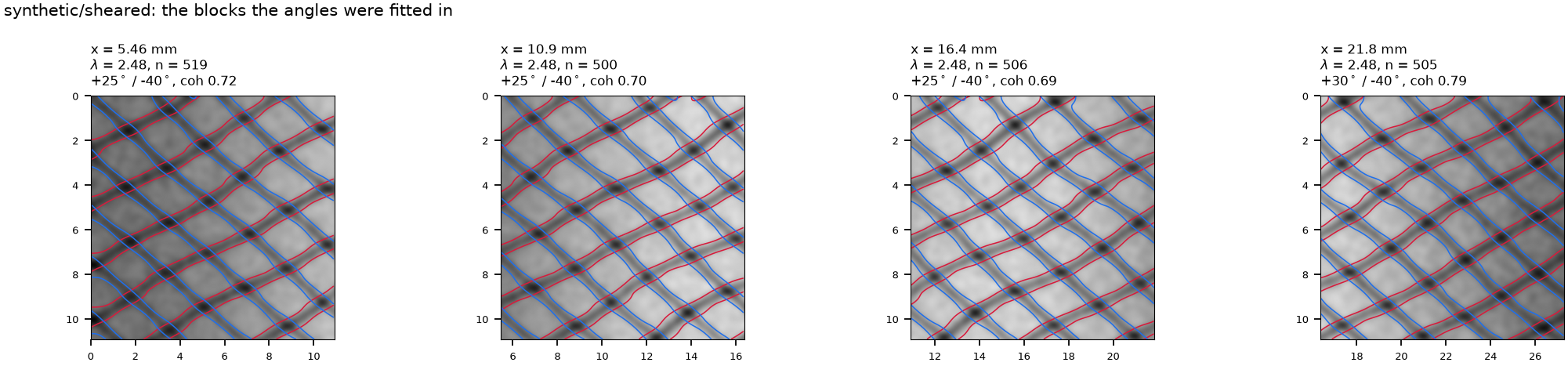
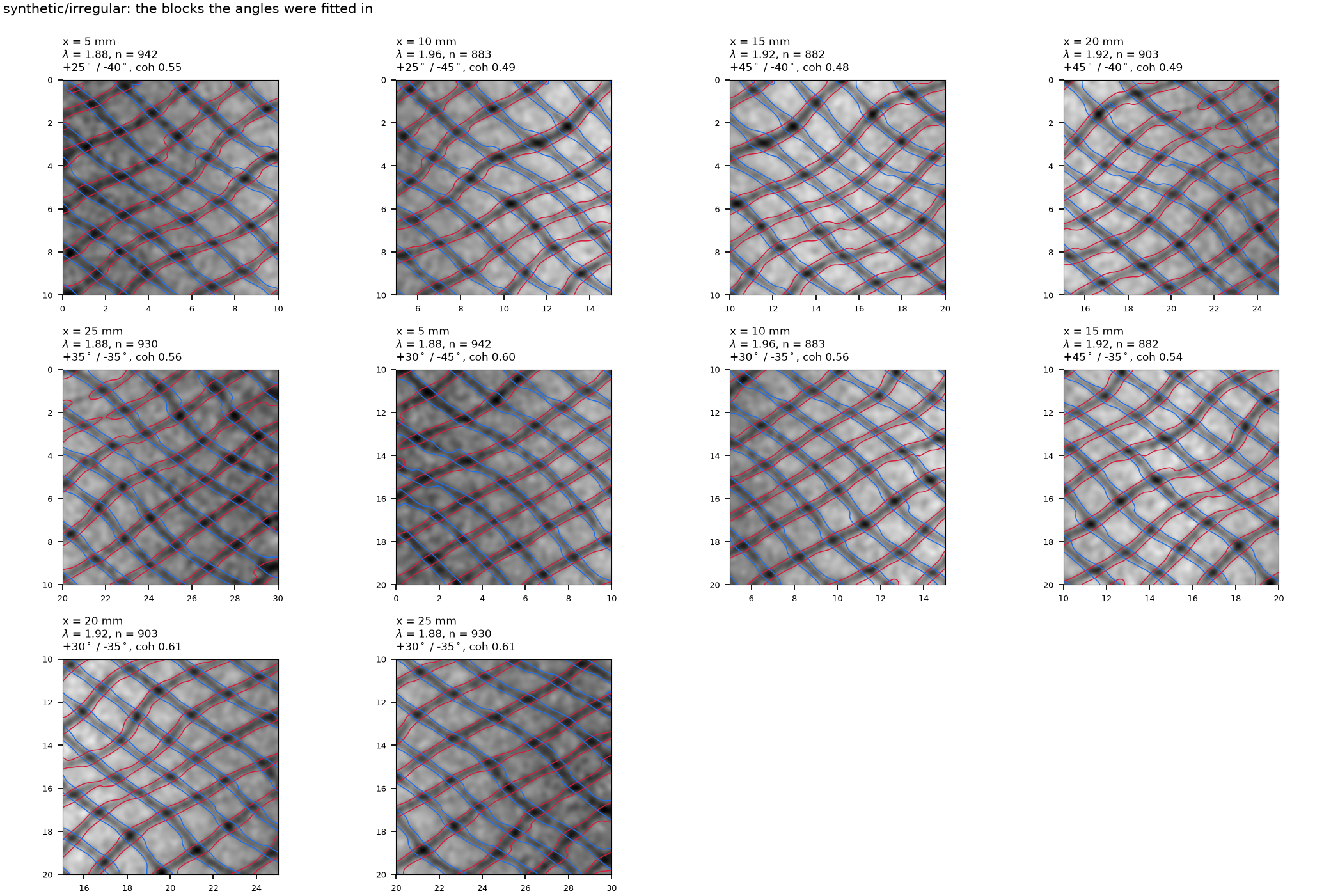
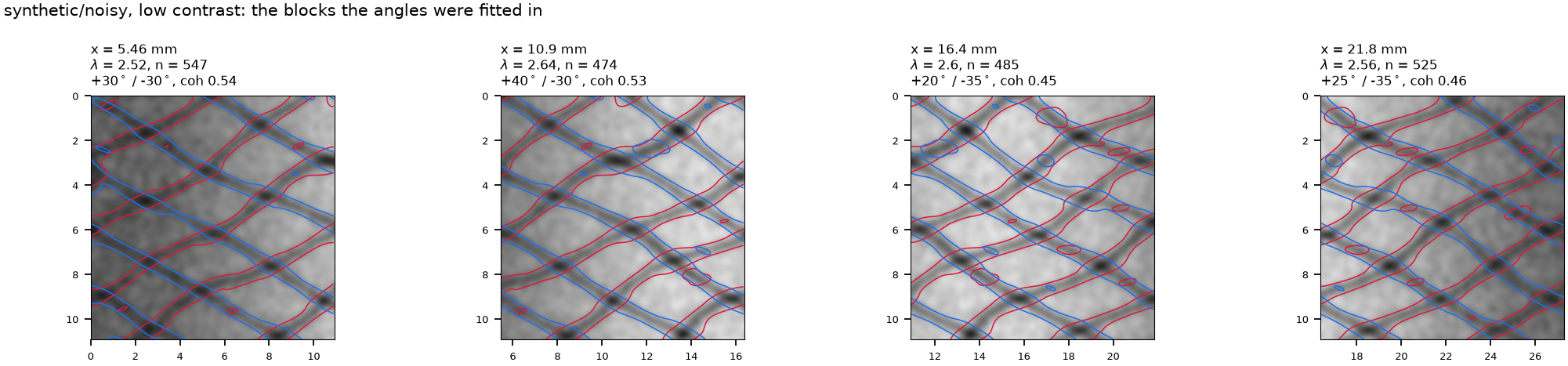
crossings, which are the measurements.Each block with the family angles fitted inside it, its own
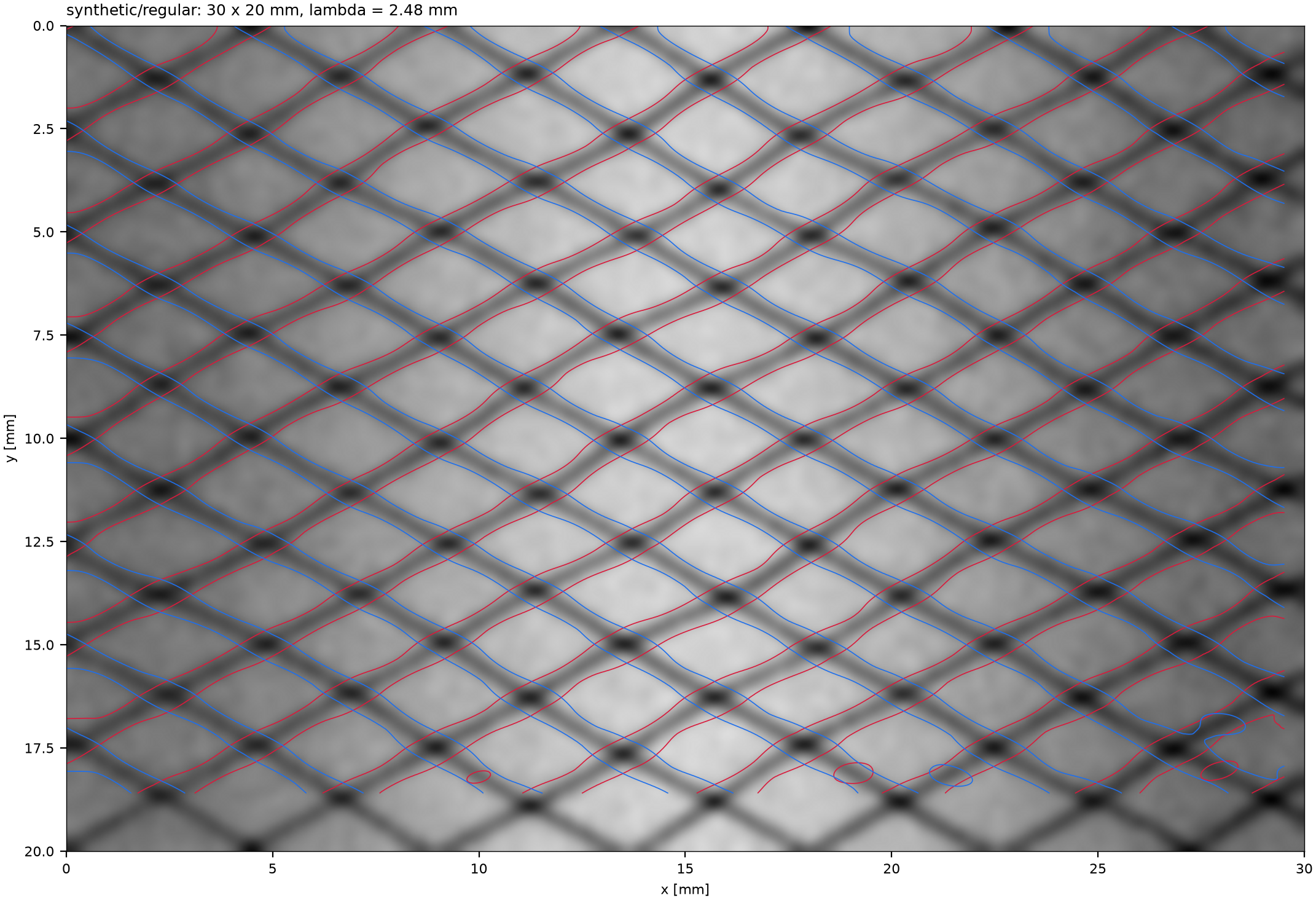
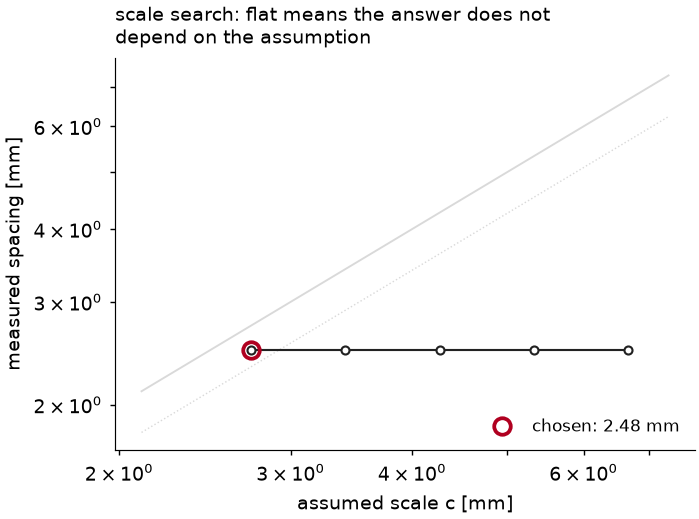
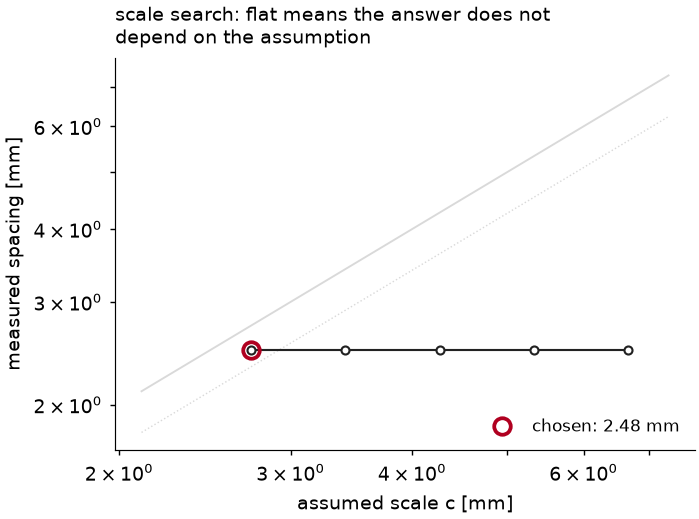
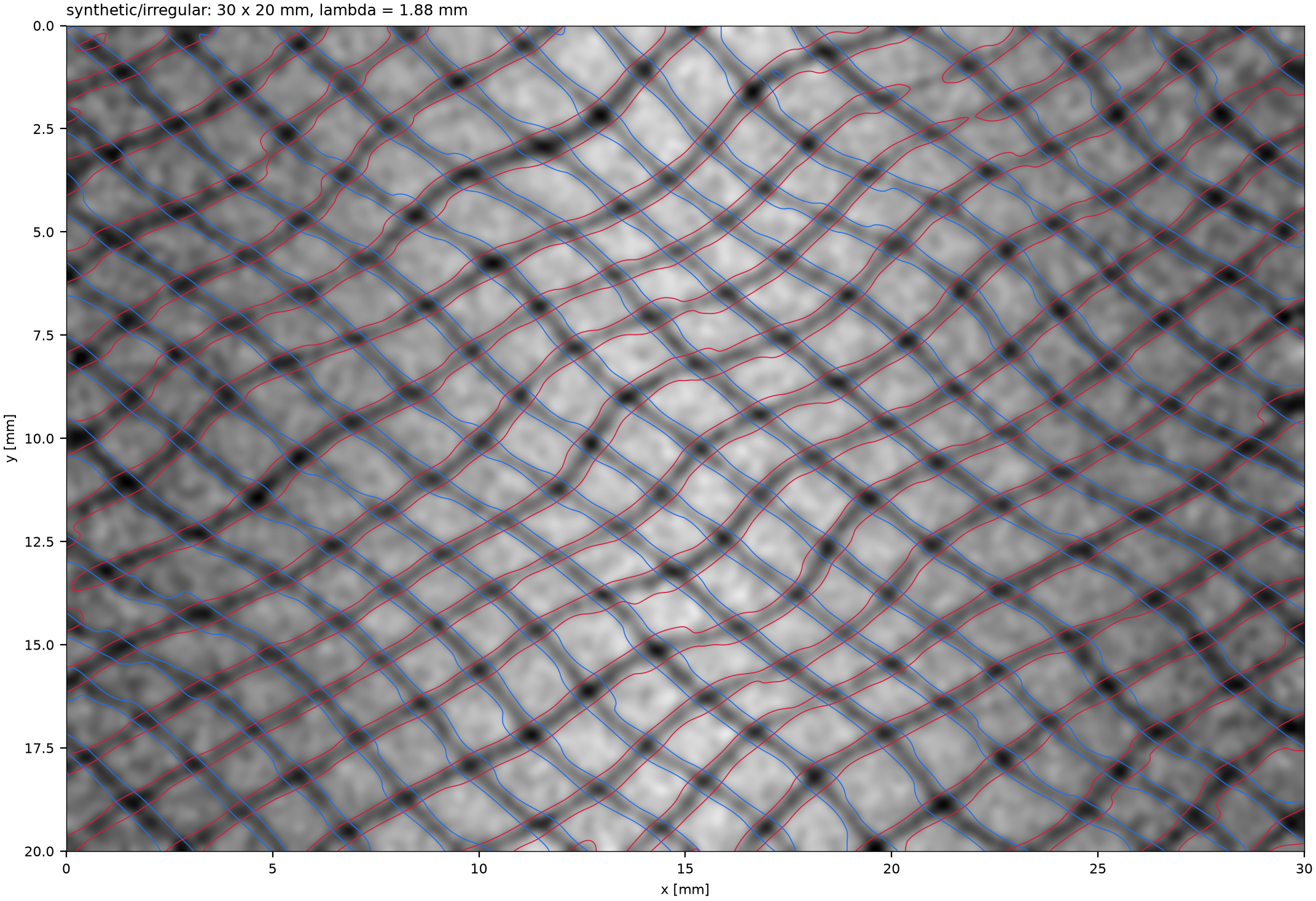
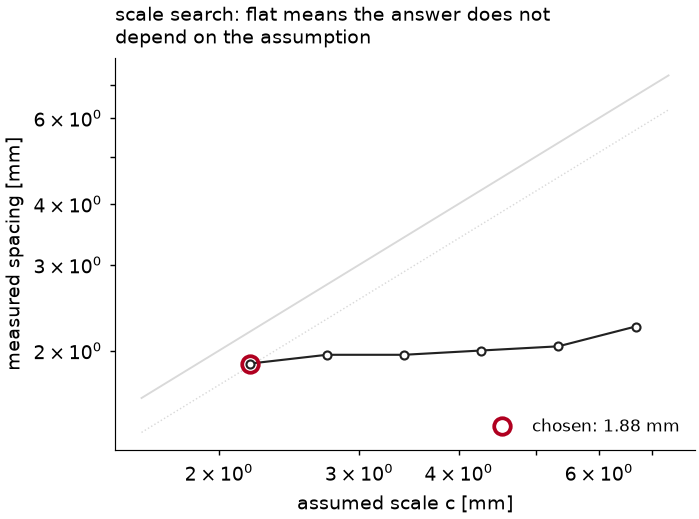
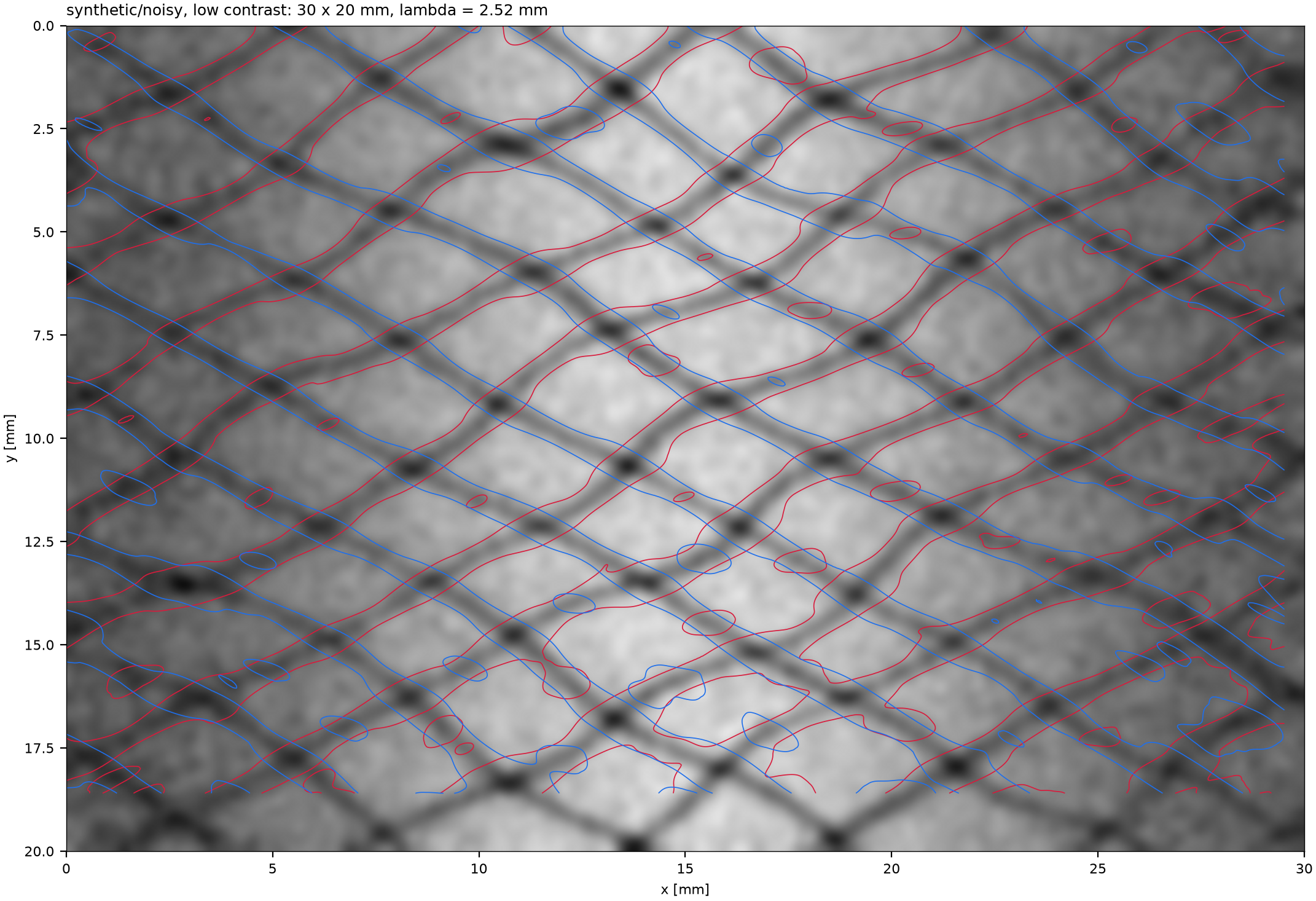
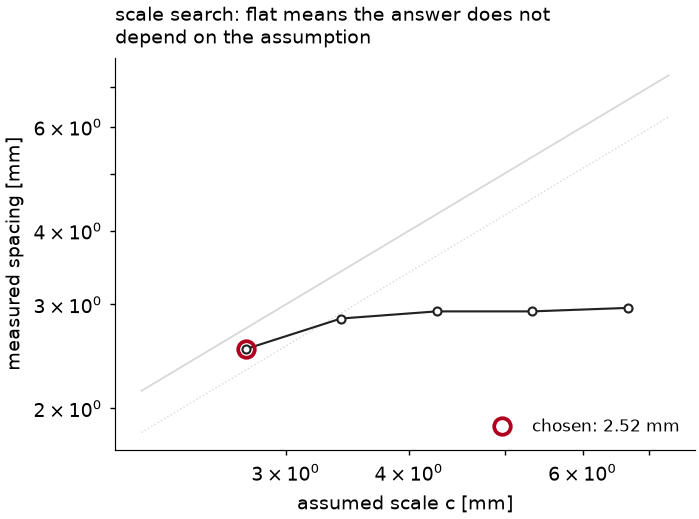
cell width and its own count.The per-block fields recombined over the whole record.The scale search. Flat means the answer does not depend on the
assumed scale.
ok
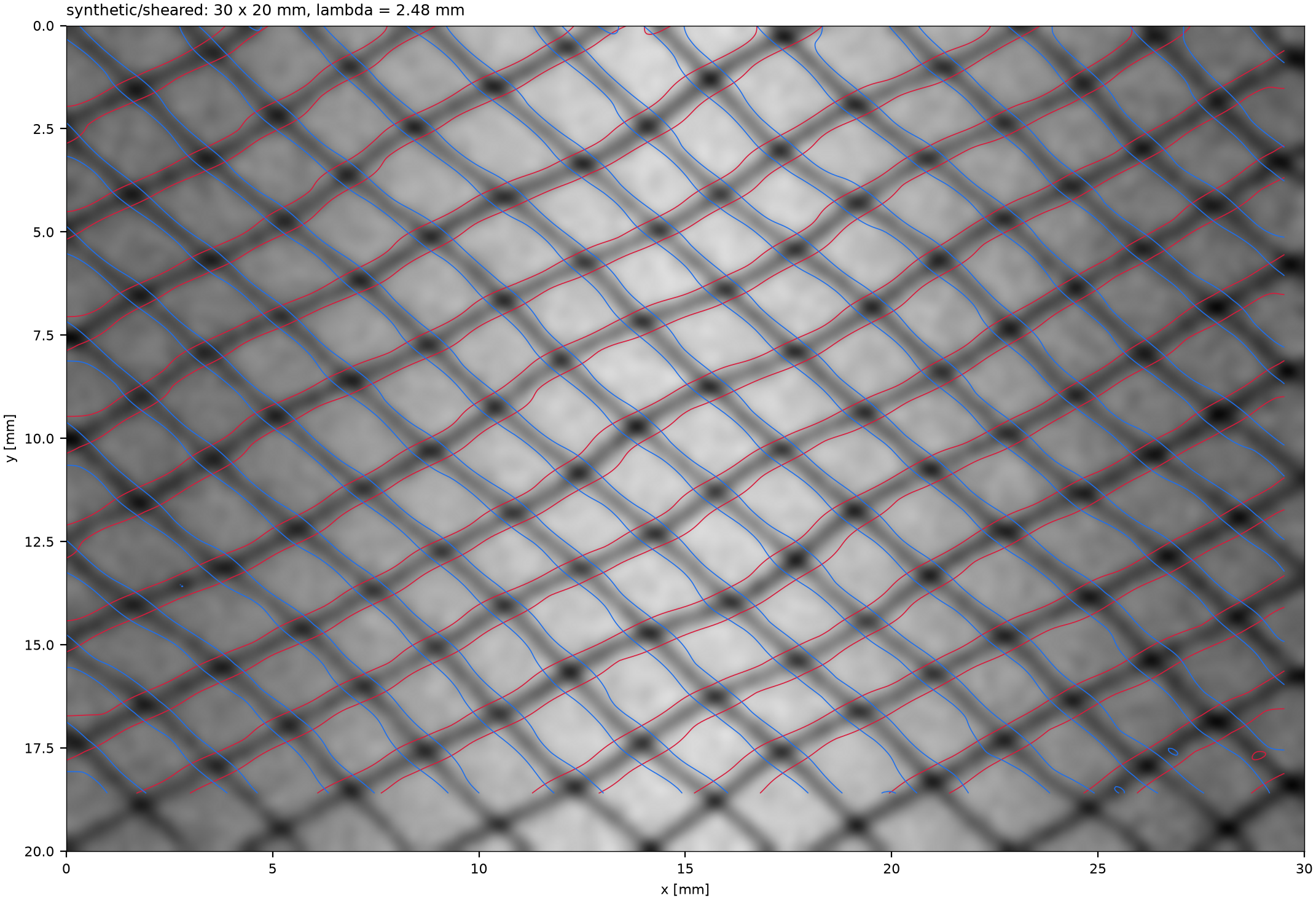
sheared
2.50true λ (mm)
2.48measured
-0.8 %error
2 %families agree to
0.71coherence
The result: every spacing measured against the true value, the
two families separately, and the block medians along the record.Where the numbers come from — the vertical cuts, the
trajectory crossings found on them, and the gaps between consecutive
crossings, which are the measurements.Each block with the family angles fitted inside it, its own
cell width and its own count.The per-block fields recombined over the whole record.The scale search. Flat means the answer does not depend on the
assumed scale.
ok
irregular
2.00true λ (mm)
1.88measured
-6.0 %error
0 %families agree to
0.56coherence
The result: every spacing measured against the true value, the
two families separately, and the block medians along the record.Where the numbers come from — the vertical cuts, the
trajectory crossings found on them, and the gaps between consecutive
crossings, which are the measurements.Each block with the family angles fitted inside it, its own
cell width and its own count.The per-block fields recombined over the whole record.The scale search. Flat means the answer does not depend on the
assumed scale.
ok
noisy, low contrast
3.00true λ (mm)
2.52measured
-16.0 %error
6 %families agree to
0.50coherence
The result: every spacing measured against the true value, the
two families separately, and the block medians along the record.Where the numbers come from — the vertical cuts, the
trajectory crossings found on them, and the gaps between consecutive
crossings, which are the measurements.Each block with the family angles fitted inside it, its own
cell width and its own count.The per-block fields recombined over the whole record.The scale search. Flat means the answer does not depend on the
assumed scale.